01
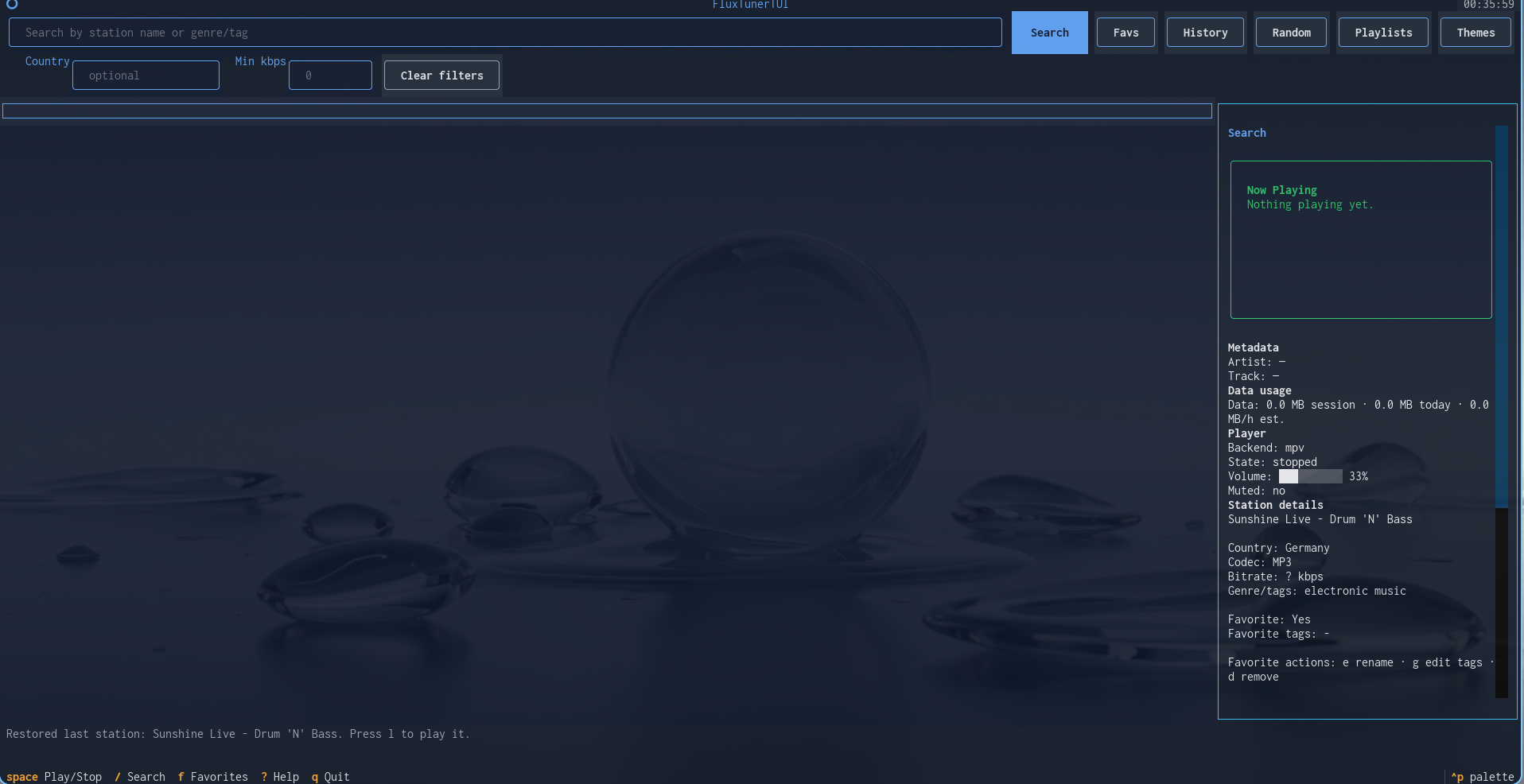
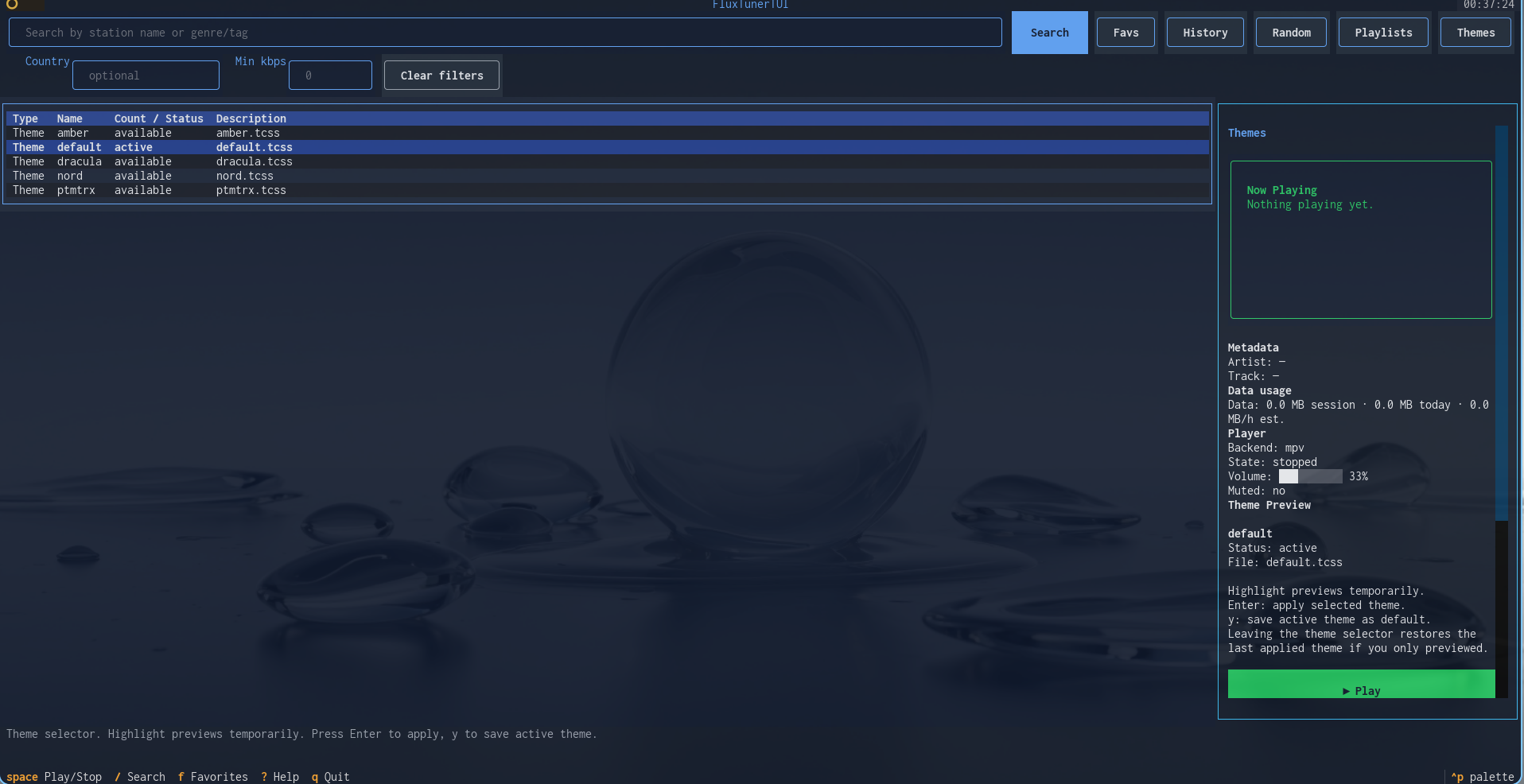
Textual TUI
The primary terminal interface: fast and keyboard-oriented, with search, playback, favorites, playlists, history, recording and configurable themes.
Project
An Internet radio platform for terminal, desktop and self-hosted Web, built around a shared core and designed to keep control of the library, profiles and data close to the user.
FluxTuner started as a direct way to search for and listen to Internet radio stations and has evolved into a platform exposing different interfaces over the same foundation. The project combines playback, search, favorites, playlists, history and profiles with a local-first approach and a self-hosted Web option.
The primary terminal interface: fast and keyboard-oriented, with search, playback, favorites, playlists, history, recording and configurable themes.
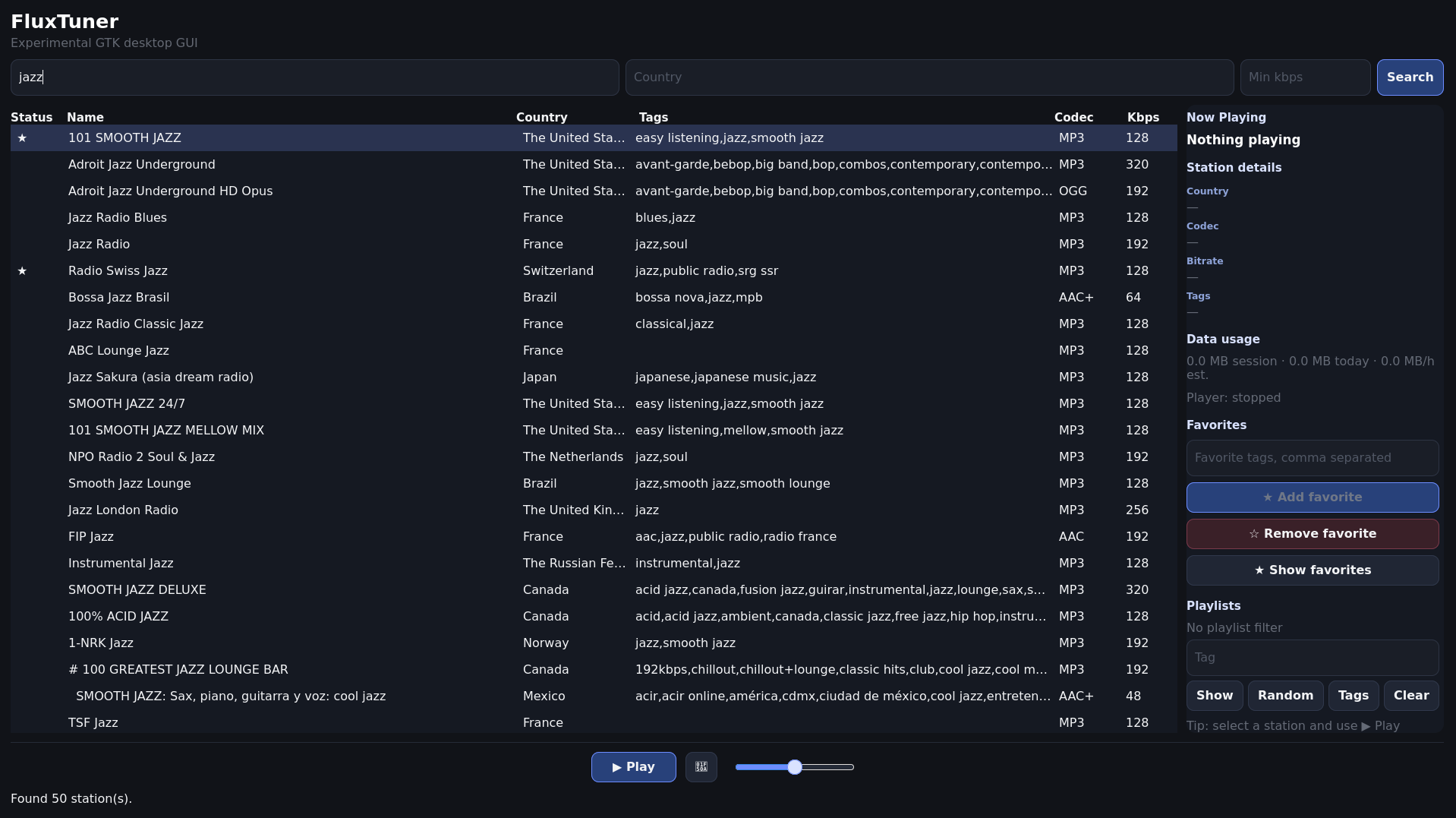
A native Linux desktop interface built with GTK4, sharing the library and functionality of the rest of FluxTuner while integrating with the desktop environment.
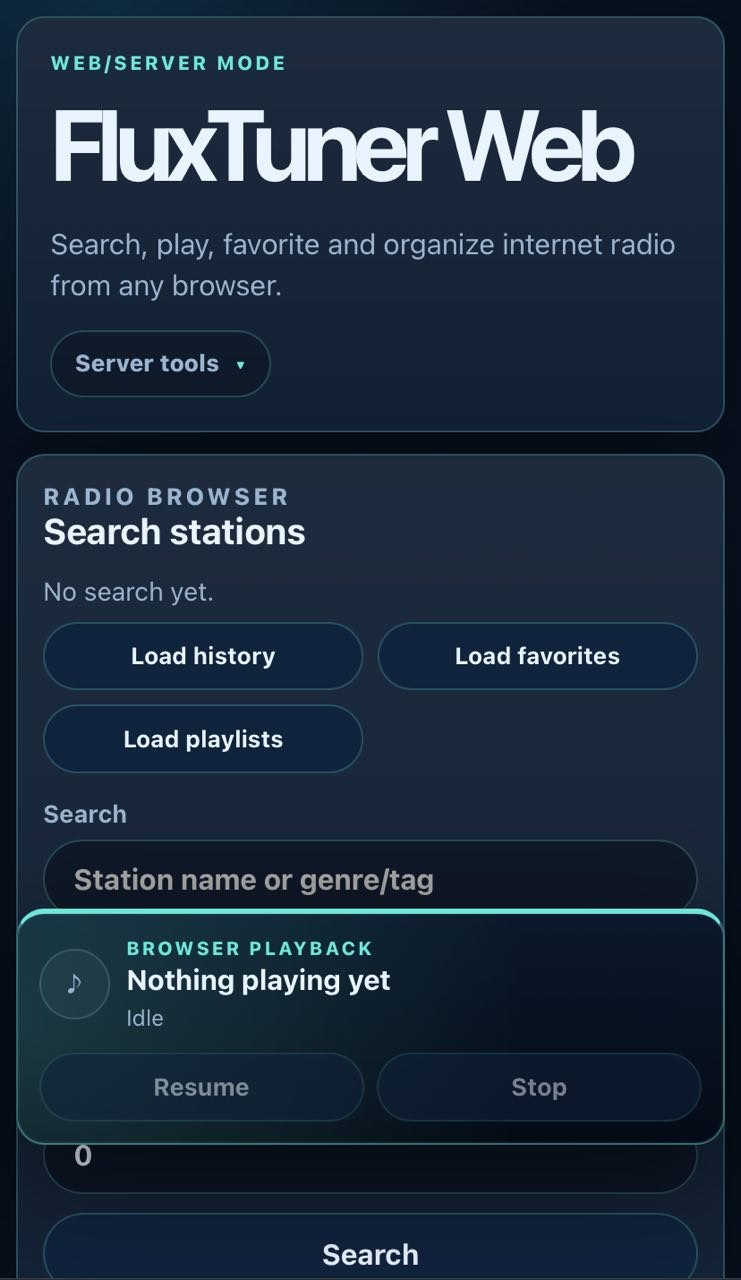
A self-hosted Web platform with user accounts, private libraries, favorites, playlists, history, administration and a responsive browser interface.
The legacy numbered interface, retained as a minimal and direct way to use FluxTuner from a terminal.
Different interfaces over the same project, from the terminal to a self-hosted Web instance.
The interfaces share the same domain and storage instead of behaving as independent applications.
Station discovery, playback, favorites, playlists, history, configuration and common logic reused across the different interfaces.
Modular backends with automatic detection for mpv, ffplay, mpg123 and ogg123.
SQLite persistence with configuration, data and cache directories following system conventions.
Profiles separate libraries and usage contexts, while Web mode adds independent authenticated user accounts.
The Web server can run on your own infrastructure, including deployment workflows suitable for Docker and Podman.
Local recording from the TUI and GTK interfaces using FFmpeg stream copy, independently from playback and without transcoding the source audio.
FluxTuner consumes Brynse as an independent stream segmentation engine. The dependency is one-way: Brynse has no knowledge of FluxTuner and can be consumed independently by other systems.